Editorial introduction
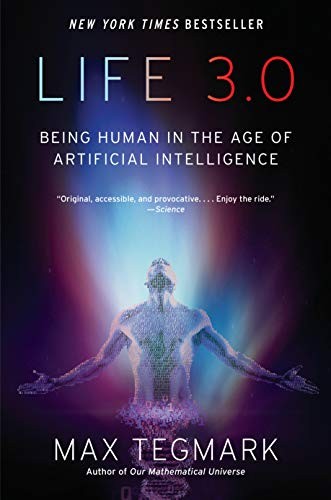
Life 3.0 begins with a distinction that makes a complicated future easier to think about. Life 1.0 changes its hardware and software through evolution. Life 2.0, including humans, can learn and update its software during a lifetime. Life 3.0 would be able to redesign both. The framework is simple, but it makes the leap from learning to self-redesign tangible.
These Kravion notes come from three reading sessions, completed on October 9, 2026. The first focused on Tegmark’s framework and the different attitudes people bring to AI; the second on fast versus slow takeoff and political power; the third on entropy, intelligence and goal alignment.
The personal thread is a tension: a fast takeoff feels plausible and frightening, yet AI might also give individuals more freedom by taking over coordination tasks. Human hierarchies developed partly to manage complexity. Whether AI strengthens them or makes decentralization easier depends on how systems are built, governed and controlled.
The useful reading habit here is data-driven optimism: separate what is measurable from what is speculative, and update your view as evidence changes. Enthusiasm and fear can both obscure the question that matters: which future are we making more likely?
Key ideas
Life 1.0, 2.0 and 3.0: what can be redesigned?
In Life 1.0, biological evolution determines both hardware and software. Life 2.0 can change much of its software through learning, while its biological hardware remains largely given. Life 3.0 could design both its software and its physical substrate. This is a framework for degrees of adaptability, rather than a claim that such AI already exists.
AI personas shape the debate
Tegmark maps different attitudes toward AI, from enthusiasm to deep concern. Recognizing those positions helps distinguish evidence about capabilities and risks from emotional reactions, hype and wishful thinking. Data-driven optimism means keeping room for better outcomes while asking what evidence supports them.
The speed of takeoff changes the room for safeguards
A fast takeoff would leave people and institutions little time to respond to a sharp increase in AI capability. A slower takeoff could allow more testing, oversight and adjustment. These are scenarios for reasoning about risk; the notes favor taking the fast scenario seriously without treating it as a settled prediction.
Coordination can empower people or concentrate control
Hierarchies help humans coordinate complex systems, but AI could change the cost of coordination. It might support decentralized decisions and individual freedom, or strengthen centralized control and surveillance. The fear of totalitarian outcomes comes from concentrated power combined with too little time to establish safeguards.
Entropy and dissipation set physical limits
Entropy describes how many microscopic configurations correspond to a system’s macroscopic state. In an isolated system, total entropy tends to increase. Living systems maintain local order by using energy and exporting entropy to their surroundings. Dissipation reduces the availability of energy to do useful work; heat death describes a possible far future with too few usable energy gradients. The universe does not literally pursue that outcome as a goal.
Intelligence needs goals; goals need alignment
Intelligence is the ability to achieve complex goals across varied environments. A highly capable system can still do harm if its objective is rigid, incomplete or poorly aligned with human values. Defining the goal precisely is only part of the challenge: we also need to understand unintended consequences and what happens when circumstances change.
Questions to keep open
How do AI personas influence policy and debate? What are the limits of data-driven optimism in an unprecedented transition? What would distinguish fast from slow takeoff? How can AI goals avoid harmful unintended consequences? When do dissipation analogies help us reason about resources, and when do they mislead? How should heat death inform thinking about the long-term future of intelligence and life?
Who this book is for
- Readers who want a clear framework for thinking about AI beyond hype and fear
- Builders and decision-makers considering goal alignment, oversight and concentrated power
- Anyone curious about the relationship between intelligence, energy and humanity’s long-term future
Kravion verdict
A clearer framework, with the hard questions still open
Across these three sessions, the Life 1.0–3.0 distinction was the clearest takeaway. The fast-takeoff scenario raised concern about control and authoritarian misuse, while the possibility of easier coordination left room for more individual freedom. The lasting practical question is how to define and align AI goals before capability outruns safeguards. One action was created; no completed actions, chosen behavior change or lasting principles have been recorded yet.